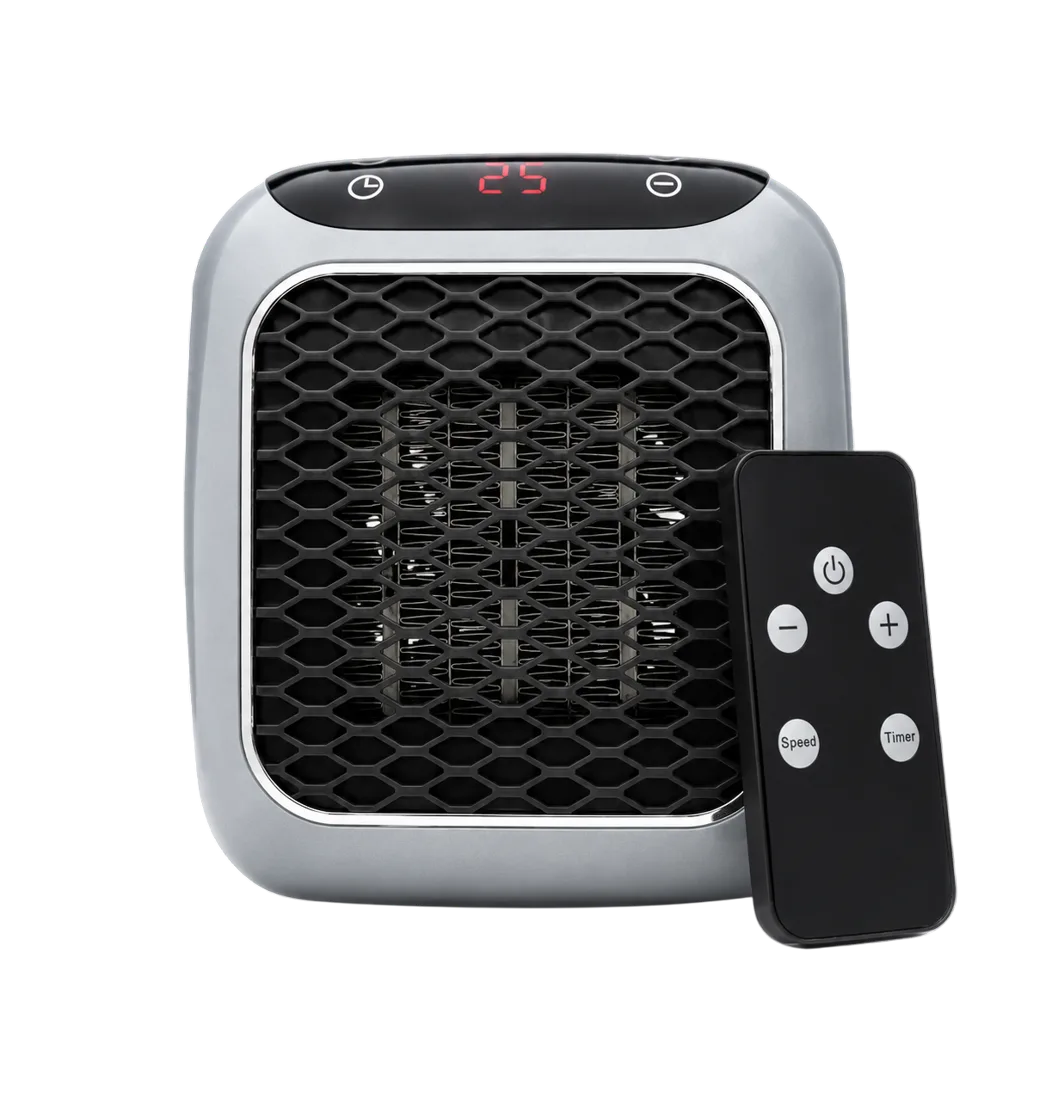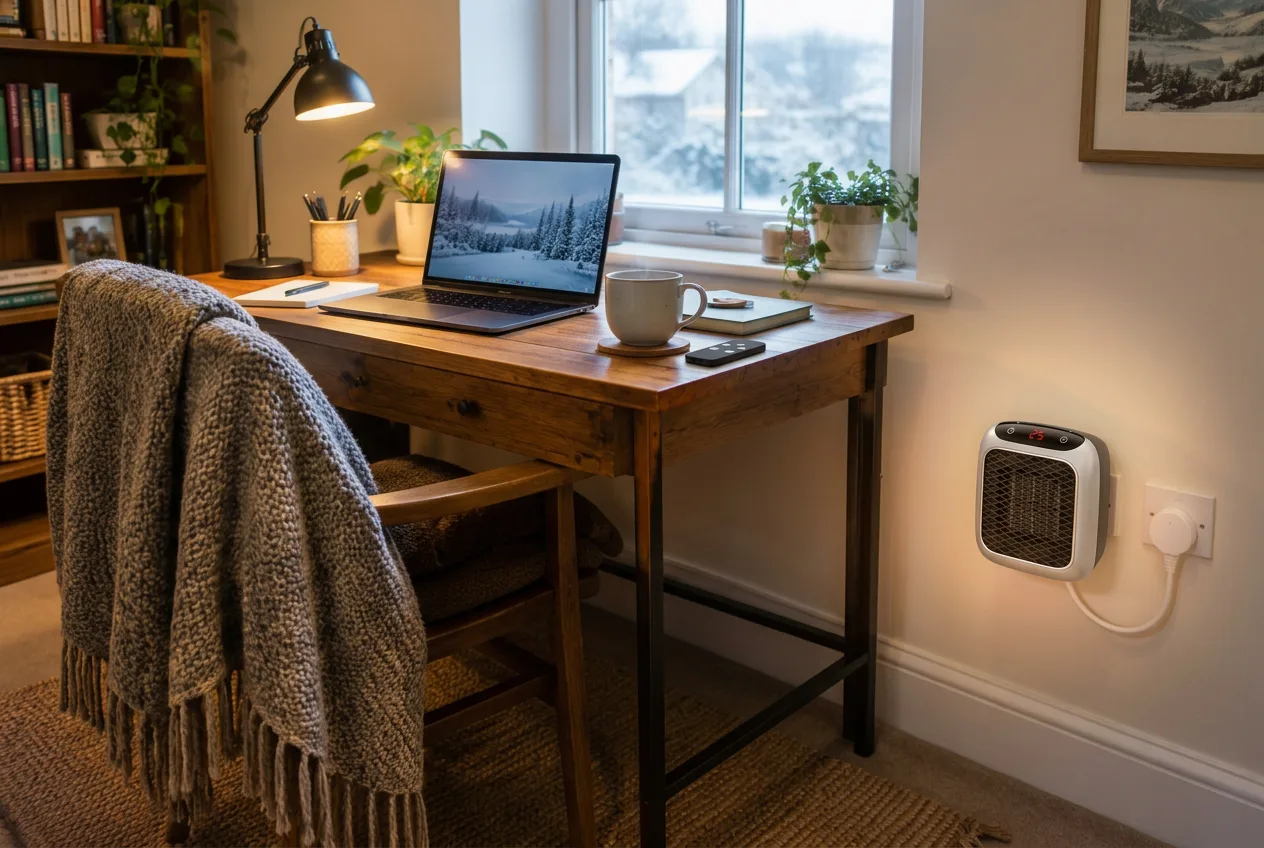
Side by side
| Feature | Ceramic heater | Oil-filled radiator |
|---|---|---|
| Cost per hour at the same wattage | Same | Same |
| Warm-up speed | Fast – warm air in minutes | Slow – 20+ minutes to warm up |
| Heat after switching off | Stops quickly | Keeps radiating for a while |
| Best use | Short, local warmth | Steady background heat for hours |
| Noise | Gentle fan hum | Near silent (occasional clicks) |
| Size | Compact; wall-plug models need no floor space | Bulky, heavy, needs floor space |
| Portability | Very easy to move | Wheels, but heavy |
| Surface temperature | Outlet grille gets warm | Fins get hot to touch |
Running cost
This is the most misunderstood part. A ceramic heater and an oil-filled radiator are both electric resistance heaters, so a 1 kW model of each costs the same per hour at full power — about 26p at 26p per kWh. Oil radiators often feel cheaper because their thermostat cycles off for longer once the oil is hot. Ceramic heaters often are cheaper in practice for short use, because you can switch them on, get warm quickly and switch them off. See heater cost per hour for full figures.
When a ceramic heater wins
- You need warmth now — first thing in the morning or when you sit down at a desk.
- The room is small, such as a bedroom, study or box room.
- You want something light and compact; a wall-plug ceramic heater takes no floor space.
- You only heat the room for an hour or two.
When an oil-filled radiator wins
- You want background heat all evening in a living room.
- You need near silence, for example while sleeping (with a timer).
- You prefer heat that lingers after switching off.
- You have floor space and don't need to move it often.
Our verdict
Neither is "better" overall. For short, local warmth in small rooms, a ceramic heater is usually the more practical and often cheaper choice in use. For long, steady heating of a larger room, an oil-filled radiator is more comfortable. Many homes use both. Compare all types in our heater types guide.