Why heater type matters less than you think
Plug-in ceramic, fan, oil-filled, convector and halogen heaters all use electric resistance: almost every watt of electricity becomes heat in your room. That means a 1,000 W oil radiator and a 1,000 W fan heater cost the same per hour at full power. What does differ is how quickly they warm you, how long the heat lingers, and how much power each one is built to draw.
So when people search for the "cheapest heater to run", they usually want one of two things: a low-wattage heater for small spaces, or a heater that lets them avoid heating the whole house. Both are about using less energy overall.
Typical wattages by heater type
| Type | Typical wattage | Best for |
|---|---|---|
| Plug-in ceramic heater | Around 400–1,000 W | One person or a small room, short sessions |
| Fan heater | 1,000–3,000 W | Fast warm-up in a medium room |
| Oil-filled radiator | 500–2,500 W | Steady heat over several hours |
| Convector heater | 1,000–3,000 W | Background heat for a whole room |
| Halogen heater | 400–1,200 W | Warming a person directly |
| Heated throw / blanket | Roughly 50–150 W | Keeping one person warm on the sofa |
Ranges are general market figures; always check the individual product's label. For hour-by-hour costs, see heater cost per hour.
When a small plug-in heater is cheapest
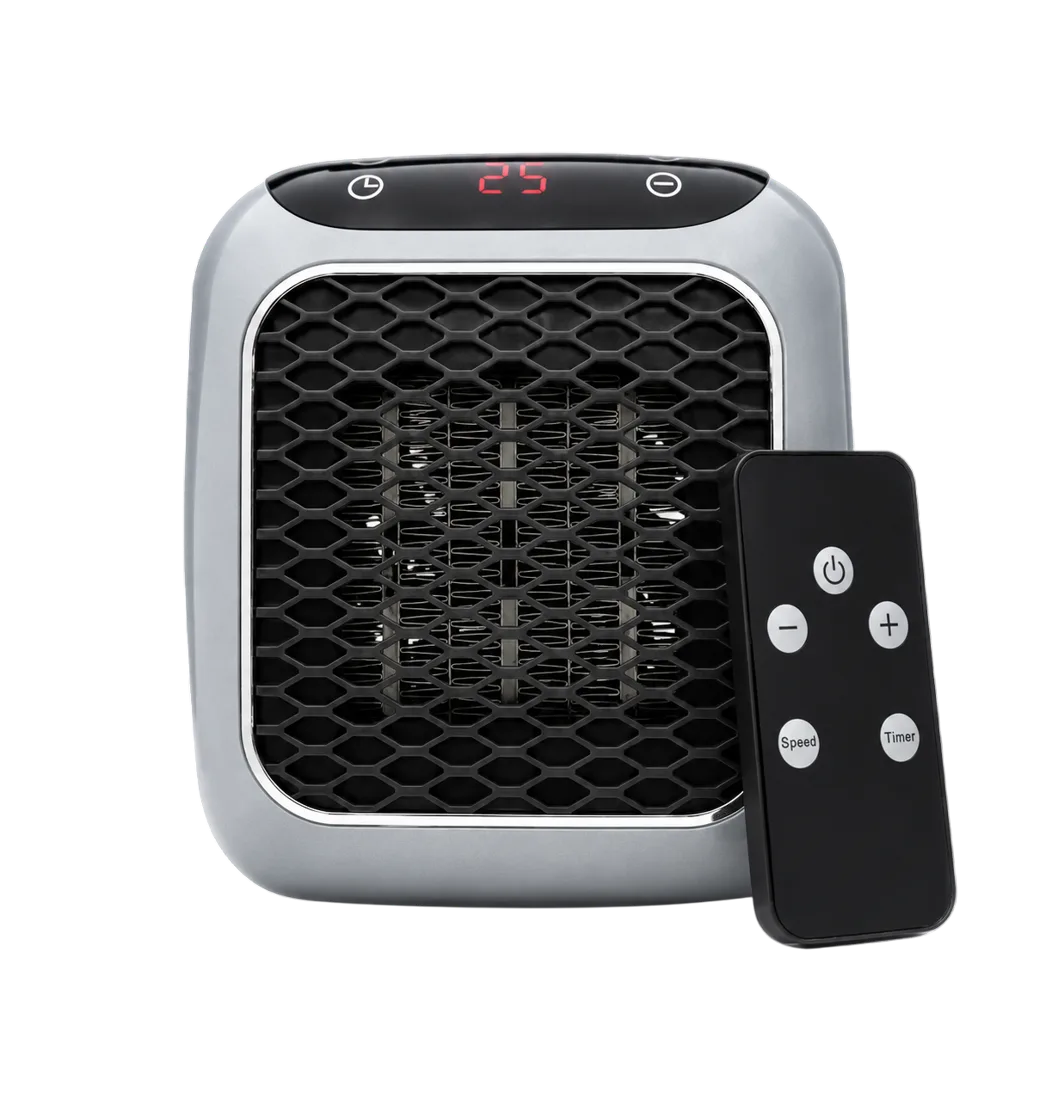
A compact wall-plug heater like RapidHeat (seller-stated 950 W average) sits at the lower end of electric heater wattages. It makes most sense when you only need warmth in one small space for a few hours.
Likely a good fit if…
- You work from home in one room
- You want to warm a bedroom before bed
- You'd otherwise run central heating for one room
- You want no floor-standing heater
Probably not the right choice if…
- You want to heat a large open-plan room
- You need heat all day in a cold, draughty space
- You want to replace central heating completely
- You need a bathroom-rated heater
Is it cheaper than central heating?
Per unit of heat, mains gas is usually cheaper than electricity in the UK. But gas central heating warms every radiator in the house. If you only use one room for a few hours, heating just that room with a small electric heater can cost less overall than running the whole system. If you need the whole home warm, central heating normally wins. See our heater comparison for more detail.
Red flags in "cheap heater" adverts
- Claims of "1p per hour" or "cuts your bill by 50%" with no wattage stated.
- Claims a tiny heater warms a whole house.
- Countdown timers and "only 3 left" stock warnings.
- No UK returns address or vague guarantee terms.