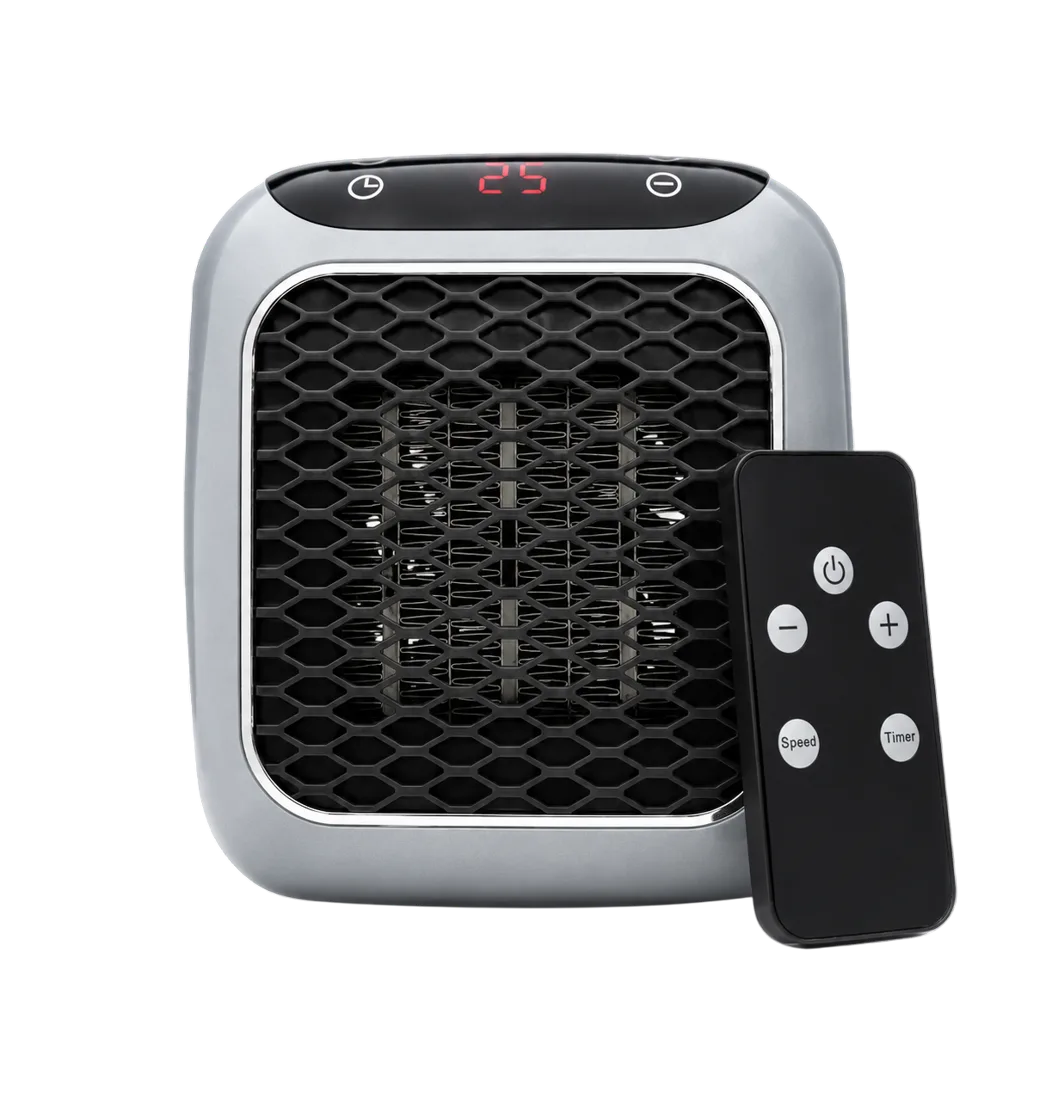
What is a plug-in heater?
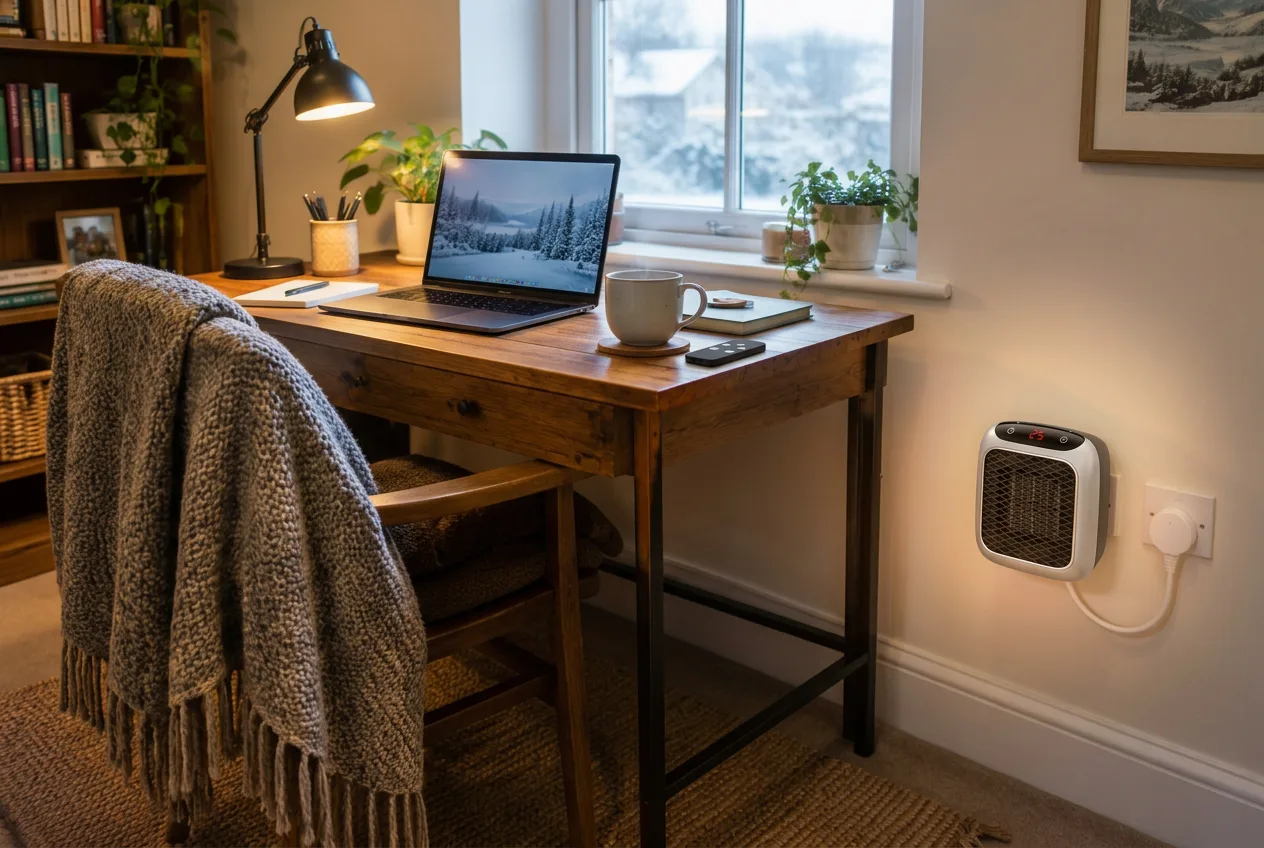
A plug-in heater, also called a wall plug heater or socket heater, is a small electric fan heater with the plug built into its back. It hangs from the wall socket, so there's no flex and nothing on the floor. Most use a ceramic element and a fan to push warm air into the room.
Are plug-in heaters any good?
They're good at a specific job: quick, local warmth in a small space. They work well for:
- a home-office corner or under a desk
- a small bedroom or spare room for a short time
- taking the chill off before you get dressed
- rooms where floor space is tight
They're less suited to:
- large, open-plan or draughty rooms
- replacing central heating across the whole home
- sockets low behind furniture or curtains, where airflow is blocked
Are plug-in heaters expensive to run?
The cost depends only on their wattage, how long they run and your tariff. Many plug-in heaters draw several hundred watts to around 1 kW, so they cost a similar amount per hour to other heaters of the same power. Work out your own figure with the running-cost calculator.
Are ceramic plug-in heaters better?
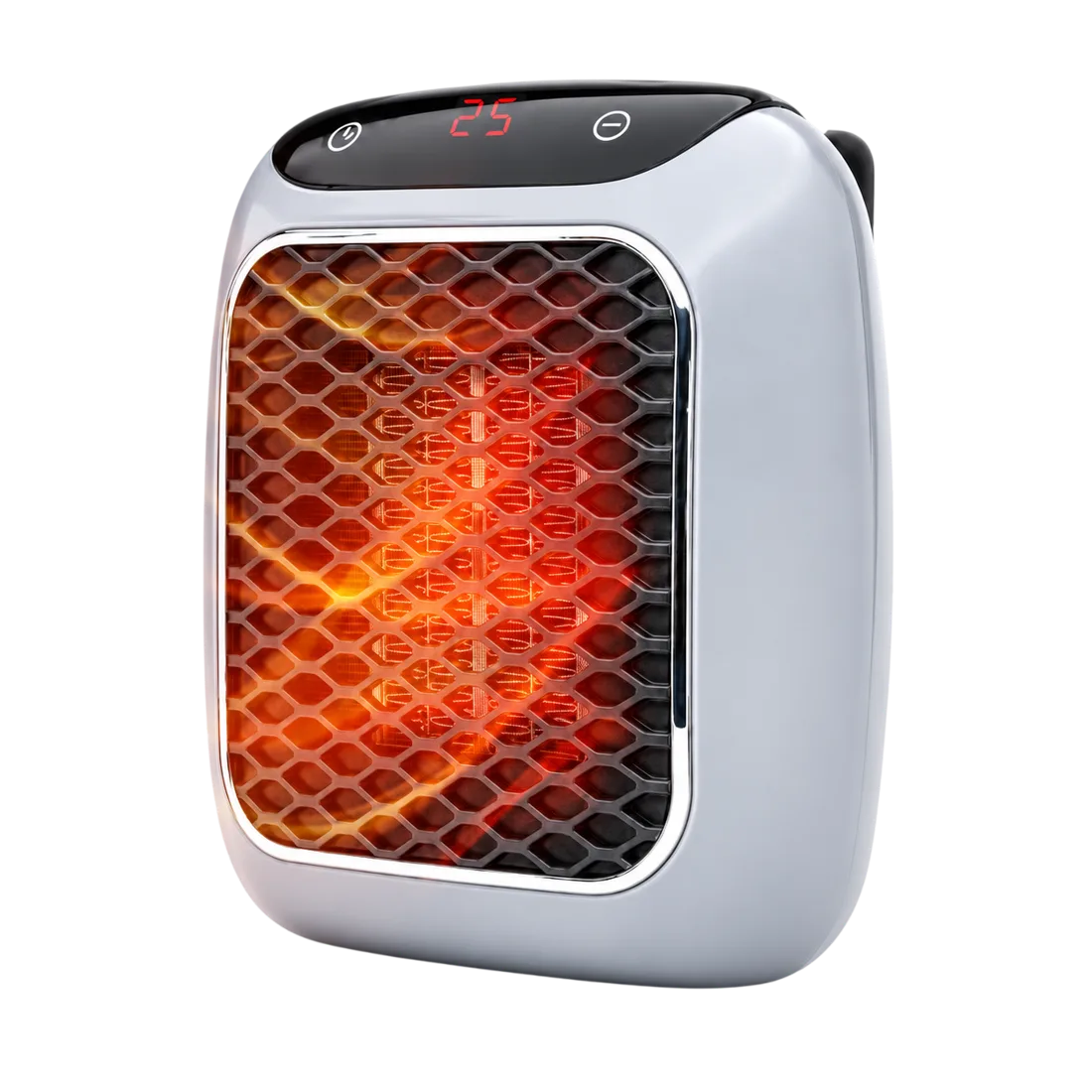
Ceramic elements heat up quickly and are common in compact fan heaters. Like all electric heaters, they turn nearly all the electricity they use into heat. The practical differences come from controls such as a thermostat and timer, and from how well the fan spreads the warmth.
What to check before buying a plug-in heater
- A UK 3-pin plug and instructions in English
- The rated wattage on the label, so you can estimate the cost
- Thermostat and timer, so it doesn't run longer than needed
- Overheat protection and clear safety instructions (see our safety guide)
- The seller's returns window and warranty terms
Where RapidHeat fits
RapidHeat is a plug-in ceramic heater with a digital display, remote control, thermostat and timer. See how its controls work or how it compares with other heater types.