
Skip to content
RapidHeat Guide UK

Compare heater types

Which kind of heater suits the way you use your room?

No rankings, just how each type works and what it's good at.

Last updated 20 October 2026

Cosy home office in winter with a RapidHeat plug-in heater in the wall socket by the desk

Quick answer

At the same wattage, all plug-in electric heaters cost about the same per hour. Plug-in fan heaters suit quick, local warmth in small spaces. Oil radiators and convectors suit steady heat over longer periods. Central heating suits the whole home.
Comparison of heater types by consistent criteria
Heater typeHow it heatsWarm-up feelFootprintPortabilityBest suited toWatch out for
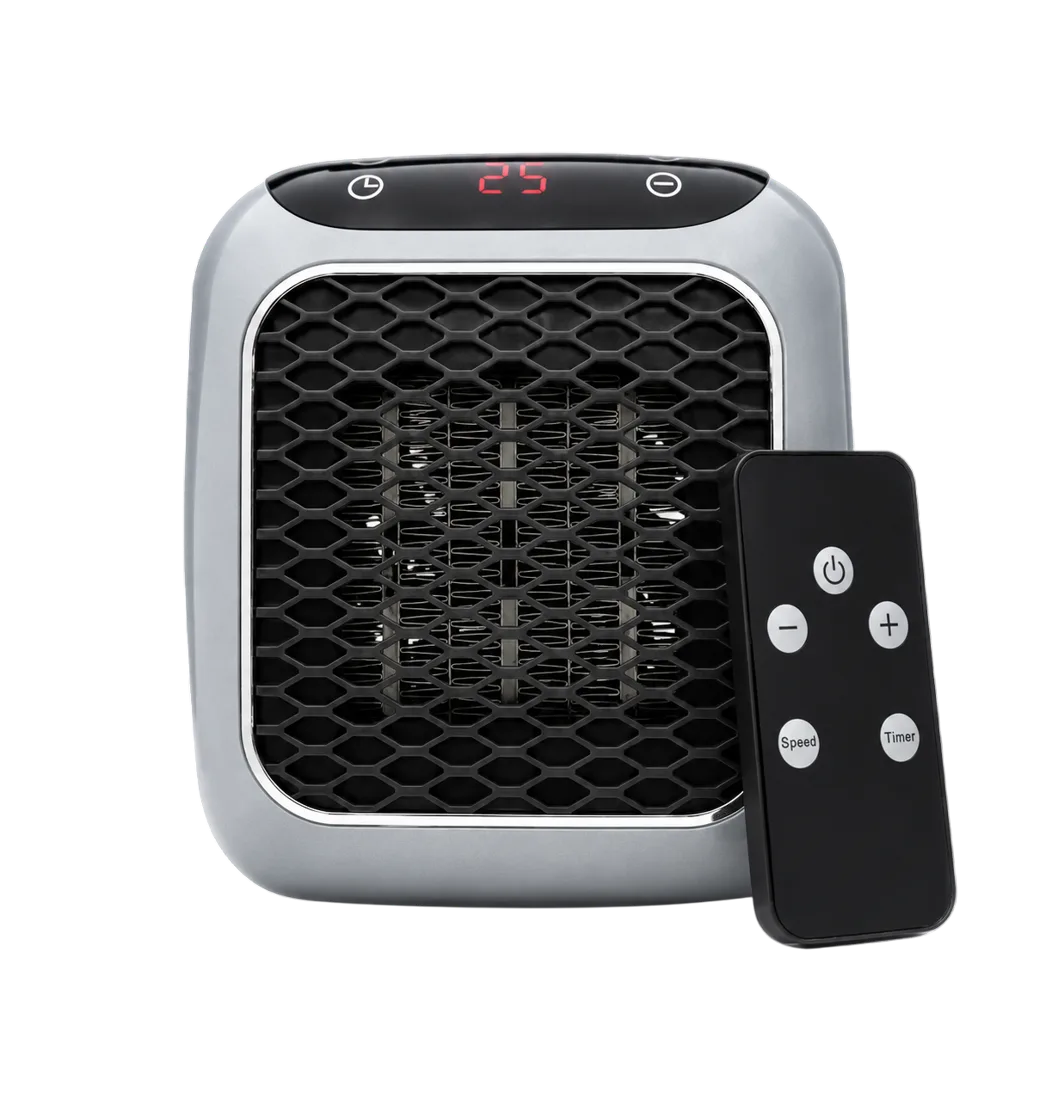
Plug-in ceramic fan (e.g. RapidHeat)Fan blows air over a hot ceramic elementWarm air is felt quickly near the unitVery small; no floor spaceLift out and plug into another socketTopping up warmth in one small room or desk areaNeeds a free, unobstructed wall socket; fan sound; small output
Freestanding fan / ceramic heaterFan blows air over an elementWarm air is felt quicklySmall; sits on the floor or deskEasy to carry; trailing flexQuick heat in small to medium roomsFan sound; flex needs care
Oil-filled radiatorHeats sealed oil; warms by convection and radiationSlow to warm, holds heat after switching offBulky; on wheelsWheeled but heavySteady background heat for longer periodsSlow response; takes floor space
Convector heaterWarms air that rises and circulatesGradual, even warmthMedium; floor or wall-mountedModerateBackground heat in a room you use for hoursSlower than fan types; heat collects at ceiling
Halogen / infrared heaterRadiant heat warms people and objects in its lineInstant warmth in its beamMedium, often tallModerateSpot warmth for someone sitting stillBright glow; little warmth outside the beam
Central heating (gas or heat pump)Boiler or heat pump feeds radiatorsDepends on system and settingsFixed installationNot portableHeating the whole homeHeats unused rooms unless zoned or valves set

Running cost depends on watts, not on the type

Any plug-in electric heater turns nearly all the electricity it uses into heat. A 1 kW fan heater and a 1 kW oil radiator cost the same per hour at full power. The real differences are how quickly you feel the warmth, how it spreads and how long you need to run it. Work out the figures with the calculator.

When a plug-in heater makes sense

A small plug-in unit is useful when you only need warmth in one spot for a short time. Think of a home-office corner, a spare room or an evening on the sofa. It saves floor space and moves easily between rooms.

When another type is better

  • Long, steady heat in a medium room: an oil-filled radiator or convector usually gives more even warmth.
  • A large or draughty space: a higher-output heater or your central heating is likely to cope better.
  • Silence matters most: oil-filled and convector heaters without fans tend to be quieter.
  • Whole-home heating: central heating with thermostatic radiator valves lets you lower rooms you don't use.
Frequently asked questions

Which type of electric heater is cheapest to run?

At the same wattage they cost the same per hour. Choose by how you use the room: quick local warmth or steady background heat.

Fan heater vs oil-filled radiator: which is better?

Fan and ceramic heaters warm up fast and suit short use. Oil-filled radiators warm slowly but give gentle, steady heat for longer periods.

Is a halogen heater cheaper?

Halogen heaters warm you directly rather than the air, which can feel efficient for one person, but cost the same per kWh.

Should I use an electric heater instead of central heating?

For one small room for a few hours, possibly. For the whole home, gas central heating is usually cheaper per unit of heat.

RapidHeat plug-in heater

See today's price on the official store

Check Price(opens getrapidheat.co.uk in a new tab)